

Baby Actors in Movie Production

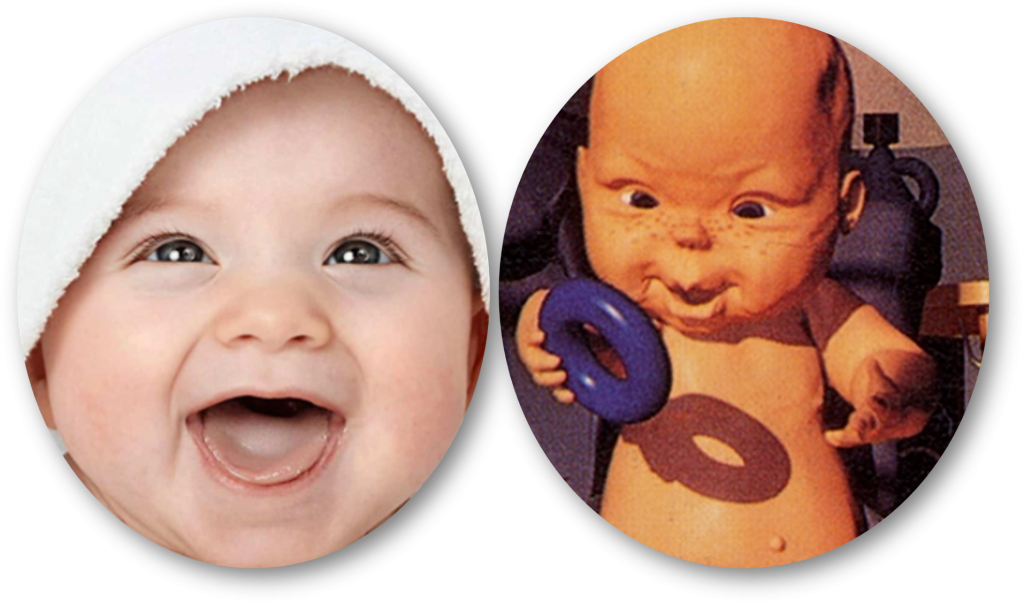
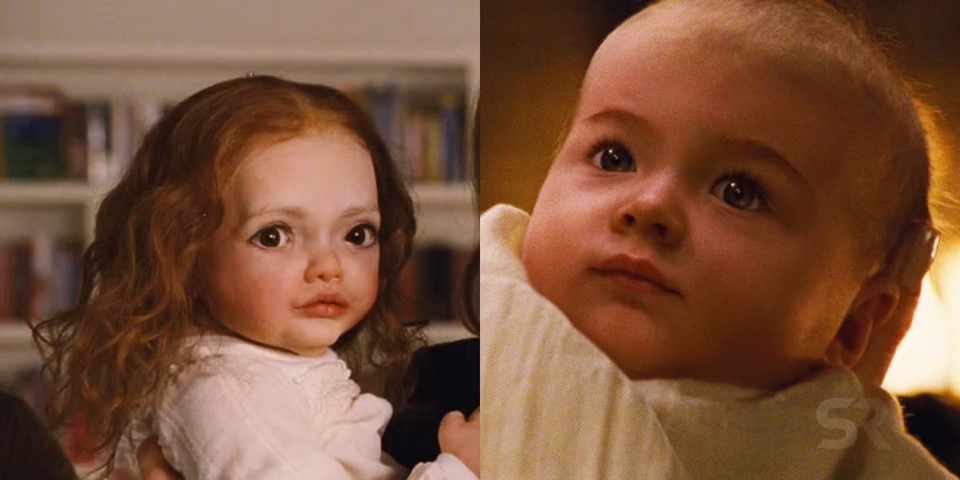
Please take a good look at these two babies. Which one do you think is the most adorable, and which one makes you slightly uncomfortable?

I believe most people will feel uncomfortable when they see the second baby. 

But why?

Babies are typically defined as human children from birth to about one year of age. Many babies in films play a crucial role in the story, but they are also considered one of the most uncontrollable factors in movie production. How to make a baby who cannot even understand human language act out certain emotions or perform certain actions in front of a camera with the whole film crew around has long been a problem for directors.

Three Main Approaches to Baby Actors

In modern-day film production, there are three main ways to address the baby actor issue: a model baby, a real baby, and a CG (computer-generated) baby.

Model Baby

Model babies are mainly used for long shots or in the filming of dangerous shots because the crew doesn’t need to worry about injuring them. The actor may run, jump, or rush through fire with the model baby.

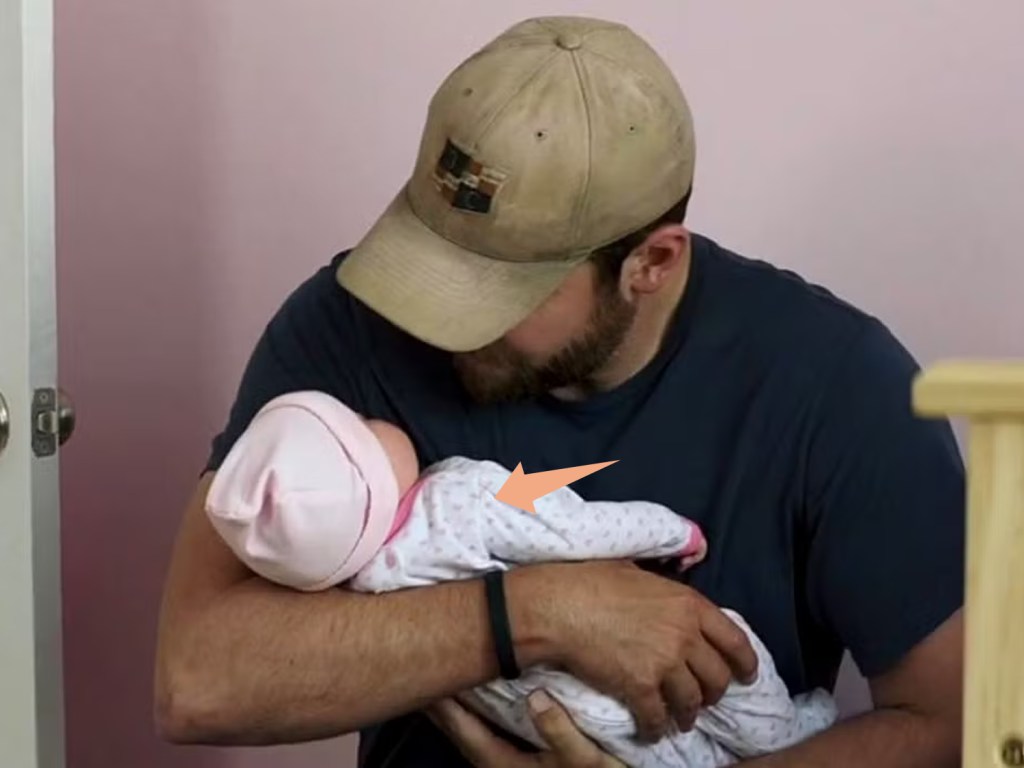
Nevertheless, model babies are not appropriate for close-up shots. When the model baby is in a close-up, the audience can tell it’s a fake baby at once. Some careless crews do make such mistakes. Take the baby in American Sniper, for instance. The baby in the man’s arms is obviously a model baby. The director mistakenly chooses a relatively close filming shot, thereby leading to a breakdown. 

Real Baby

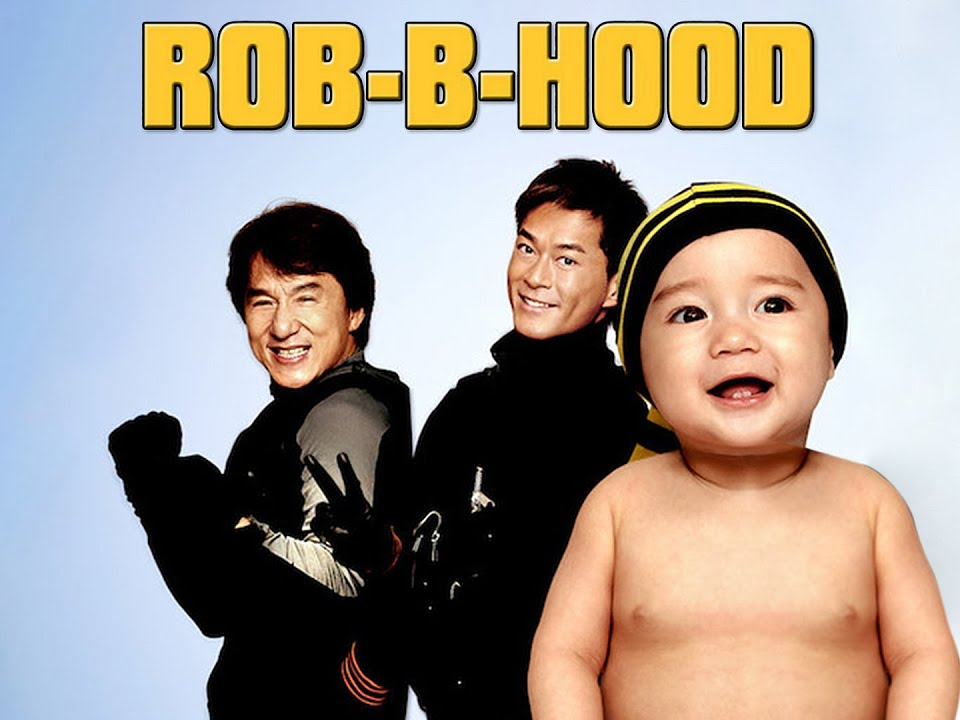
As for the real baby actor, it truly means borrowing someone’s cuteness to act in front of the camera. In fact, some of the babies can give surprises to the crew. Some baby actors were even discovered by the director on the subway riding home, like Matthew, who played the cute baby in Rob-B-Hood.

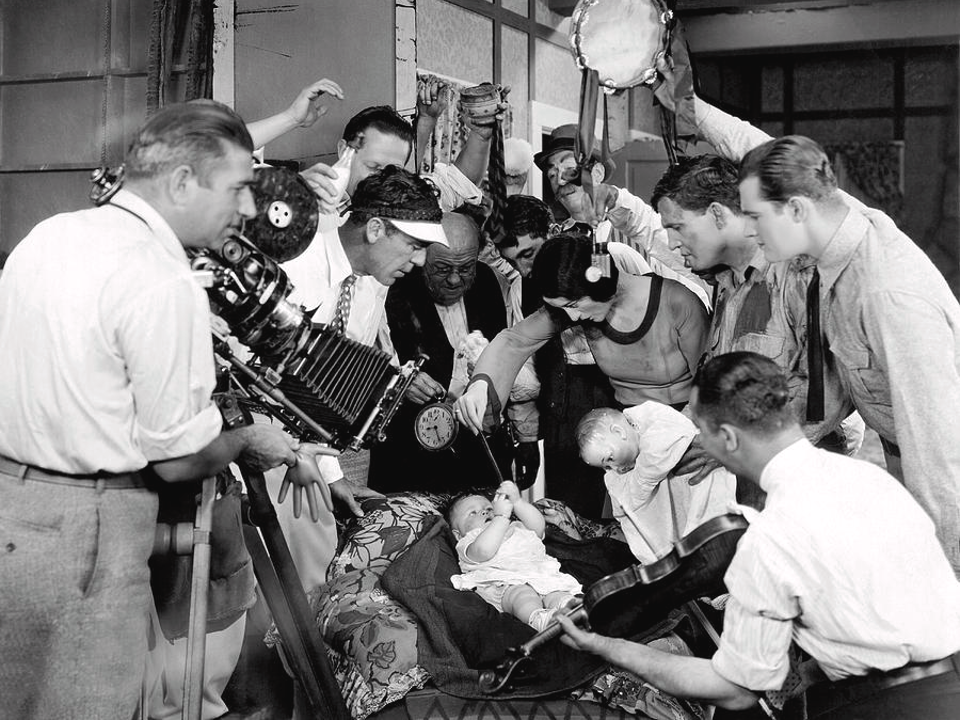
In Hollywood, there will be a professional Children Actor Coach. Coaches hide behind the camera and guide the baby to act out certain emotions or movements.

However, there is also an issue with this method. In US law, baby actors may only film for 6 hours maximum, which heavily delays the whole crew’s filming process. Six hours is a relatively short time for the filming. When all the makeup is done, and the baby has finally got into the proper mood, six hours might have already passed. Therefore, most crews will pick twins to elongate the filming period. Also, a baby that doesn’t like to sleep is welcomed by directors.

CG Baby

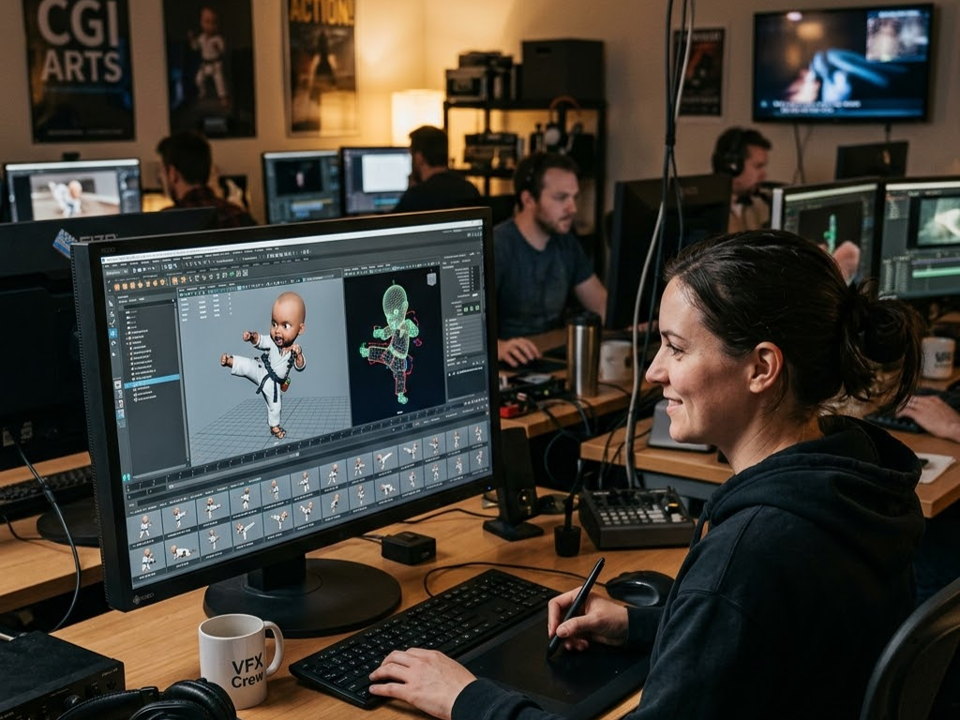
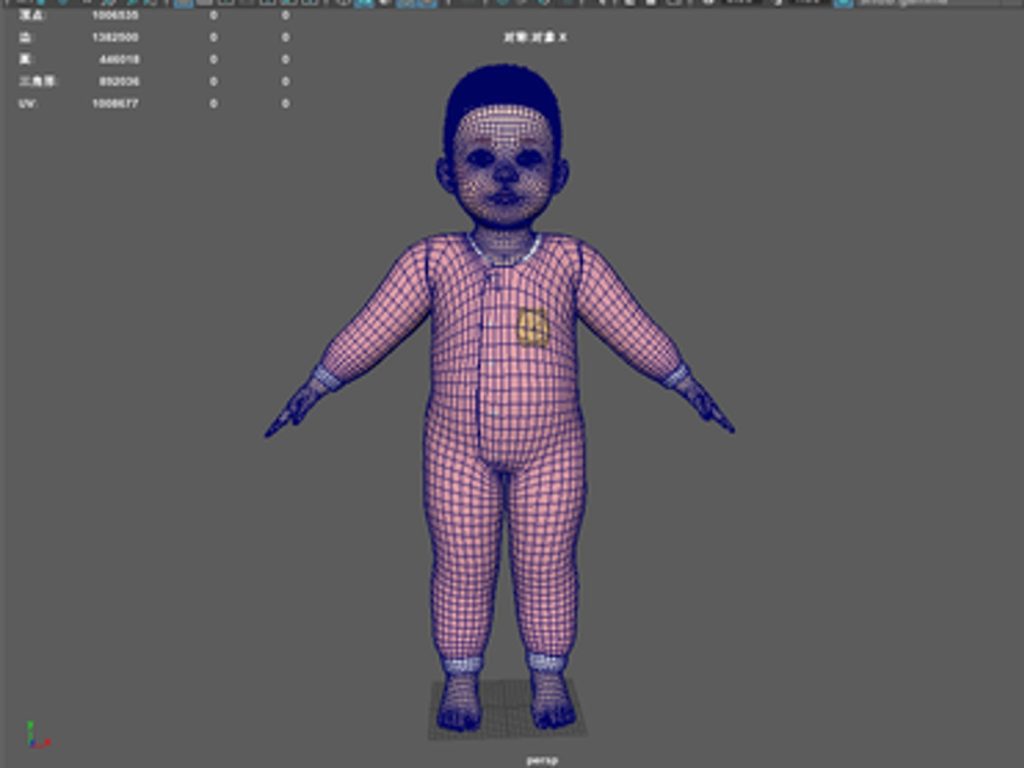
Compared to the two mentioned methods, the CG baby is highly advantageous. CG baby is a virtual model that only exists in the computer created by the film crew. Normally, the visual effects group will choose a baby in real life as a sample to create the virtual baby.

CG babies give the director high flexibility in designing different shots. It also allows “babies” to make some incredible movements. In comparison with normal model babies, the CG baby can handle both close shots and long shots; In comparison with real baby actors, the CG baby can make any possible or impossible movement, and cry and smile at any time that the director wishes, theoretically.

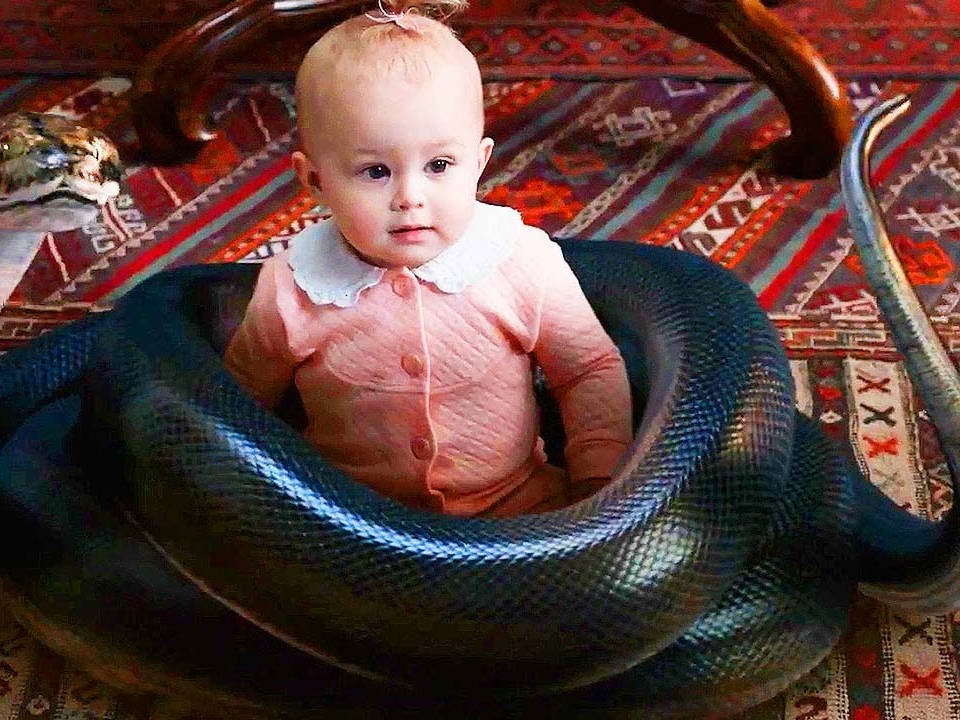
In the movie Lemony Snicket’s A Series of Unfortunate Events, the crew wants to film a shot of little Sunny Baudelaire interacting with a snake. Apparently, they cannot use a real baby and a real snake in filming this shot. Hence, they chose CG to produce the scene.

Yet, CG babies also have an obvious drawback: it’s a money pit. Without enough capital, some crews can only come up with a rough virtual model, providing the audience with an ugly baby.

With enough capital and skilled staff, many crews can make a realistic virtual model. Also, sometimes these models look strangely horrifying. These “skillfully made” babies give audiences a sense of feeling that they look like a human baby, but they still produce an uncomfortable feeling.

For example, during the filming of The Twilight Saga: Breaking Dawn, when it comes to the portrayal of Renesmee, a half-human, half-vampire infant who grows rapidly and exhibits supernatural intelligence, the crew once considered using the combination of a model and a CG baby. Even though the property department and visual effects group worked hard, the baby in the final clip still looks horrifying. In the end, the film crew must give up the idea.

But why? The Uncanny Valley Theory

These babies look so much like a real baby already! To explain this strange phenomenon, we need to mention a psychological theory: The Uncanny Valley Theory was proposed in 1970 by Masahiro Mori, a Japanese robot expert. 

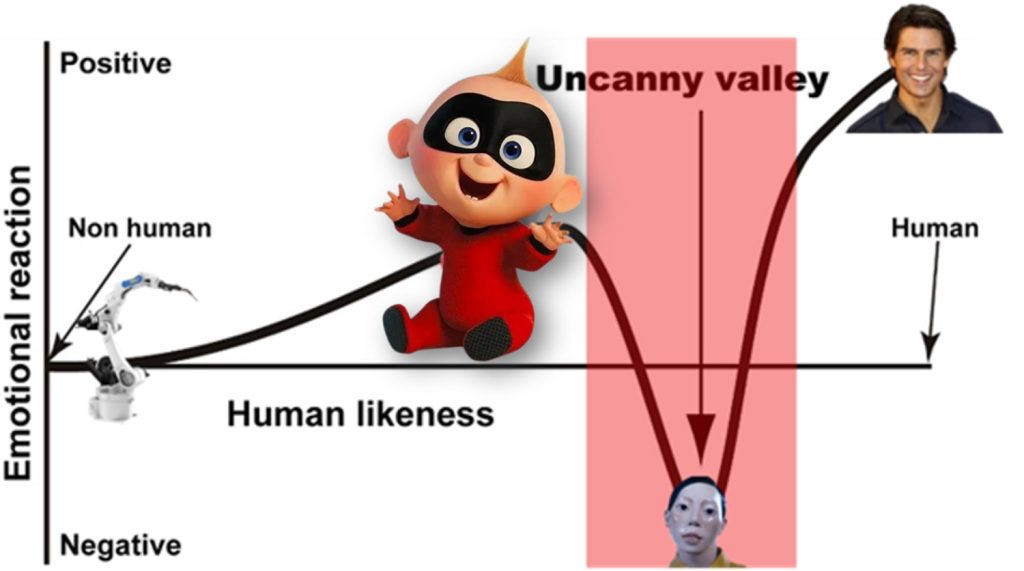
The theory states that when the look of an object slowly approaches from non-human-like to human-like, the positive emotional reaction of people will slowly rise, sharply drop at some point, then start to rise again.

Most people probably have experienced this effect when they are window-shopping. Some terribly made plastic models that aim to display the clothes might have a weird face, which could make the customers uncomfortable.

Overcoming the Valley in Modern Production

In modern CG baby production, there are two main ways to avoid the Uncanny Valley effect.

Method 1: Cartoon-Like Character (Stay on the left side)

The first method is mainly used in animations to make the character more cartoon-like, so that the character will lie on the left side of the Uncanny Valley on the graph. In modern animation production, most crews will avoid creating really humanlike characters and will design exaggerated elements for them.

For example, Jack-Jack Parr, the young baby in The Incredibles, is a great example. The crew gave the baby a more cartoonlike appearance, which contributed to the widespread praise for the film. Most audience members liked Jack-Jack Parr because he’s such a cute baby with a superpower.

Method 2: Hyper-Realism (Crossing to the Right Peak)

The second method is relatively costly: use highly skilled modeling techniques to graph the characters realistically so that they can pass the Uncanny Valley, reaching the other side. This method challenges not only the visual effects group but also the financial reserves of the entire movie production crew.

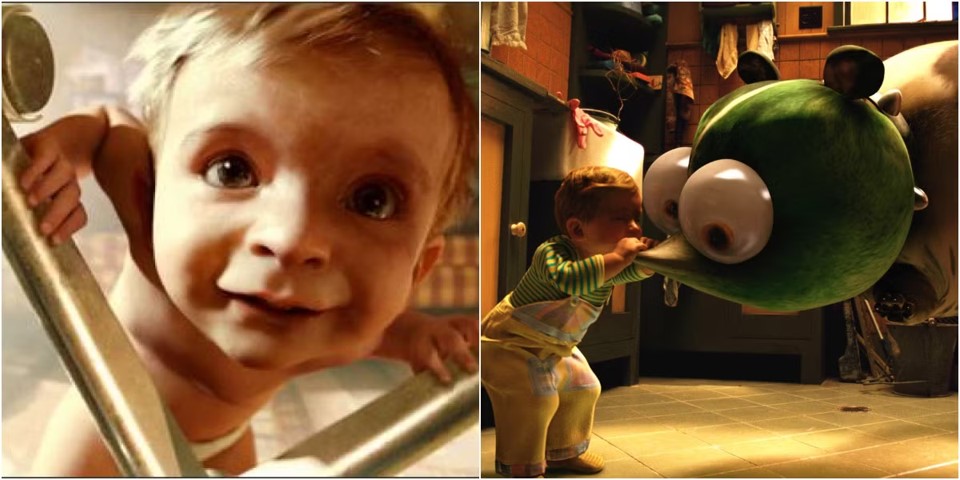
Take the movie Son of the Mask 2, for example. The super baby, Alvey Avery, in the movie is a CG baby. The visual effects group took over 4,000 photos of Liam Falconer and Ryan Falconer, twins, the prototypes of Alvey Avery, the superpower baby in the movie. 

Thanks to their hard work, the audience gets to see such a realistic and funny baby on the screen.
Andrew

Like this article ?

There are more in PSYCADE

A website about media psychology knowledge founded by me and my classmates of Beijing 101 High School

Go to PSYCADE
×
滚动至顶部